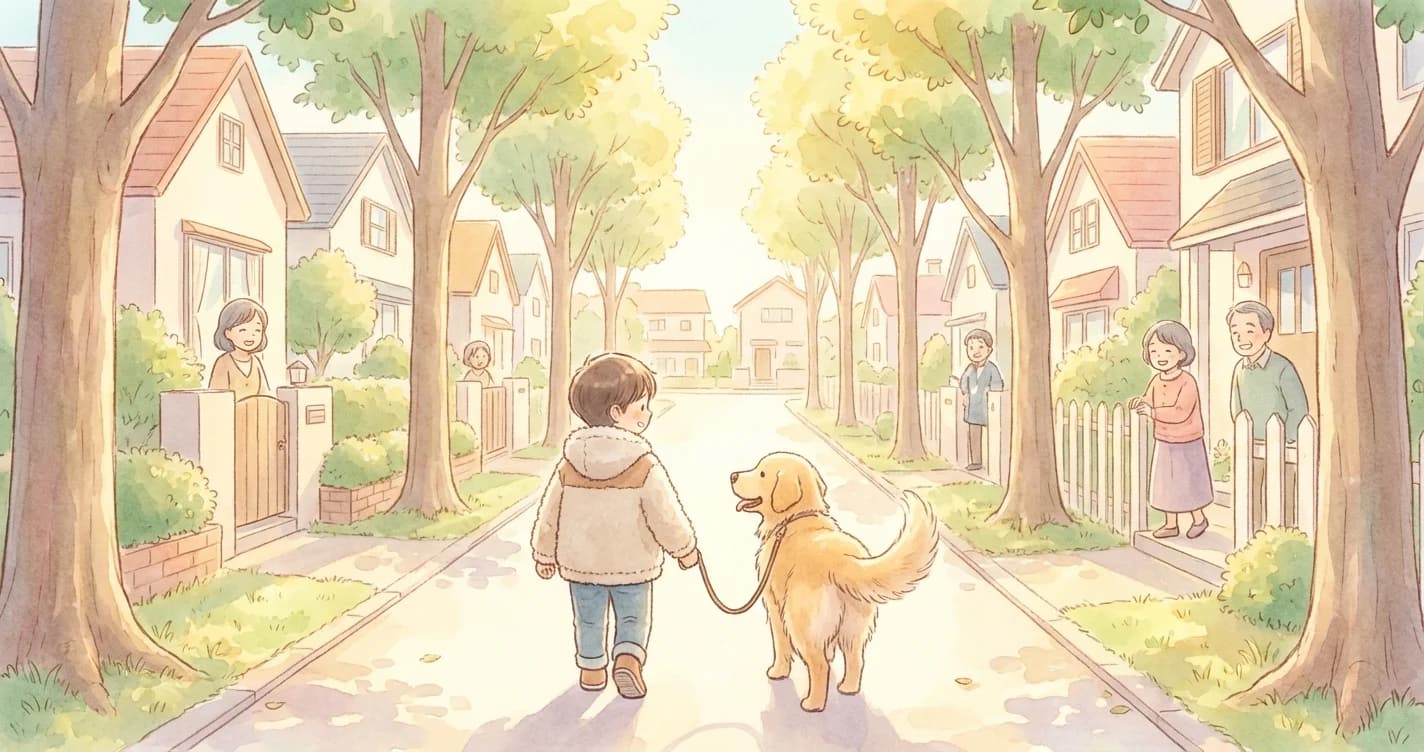
What Responsibility Really Means
Responsibility isn't just about completing tasks. It's a mindset of ownership— understanding that your actions have consequences and that you have the power to affect outcomes. A responsible child doesn't just do what they're told; they recognize why it matters and take initiative.
Three Dimensions of Responsibility
Self-Responsibility
- Personal hygiene
- Managing belongings
- Homework & commitments
- Emotional regulation
Family Responsibility
- Household contributions
- Caring for siblings
- Respecting shared spaces
- Family commitments
Social Responsibility
- Kindness to others
- Environmental awareness
- Community participation
- Ethical behavior
Does giving kids responsibility actually change how they turn out?
There is real evidence linking household contribution to how capable children feel, and it is more modest than the claims you will see repeated online. White, DeBoer & Scharf (2019), published in the Journal of Developmental & Behavioral Pediatrics, analyzed 9,971 US children in the Early Childhood Longitudinal Study and found that children who rarely did chores in kindergarten had higher odds of scoring in the bottom fifth for prosocial behavior, academic ability, peer relationships, and life satisfaction — and that doing chores was associated with better third-grade math scores, after adjusting for sex, family income, and parent education.
What that study measured was self-competency, not career outcomes. It is an association, not proof that chores cause anything. Anyone who tells you a "75-year Harvard study" proved chores predict career success is repeating a claim that traces to a 2015 TED talk rather than to a published Grant Study finding.
The other real study is older and smaller. In Involving Children in Household Tasks: Is It Worth the Effort? (University of Minnesota, 2002), Marty Rossmann tracked 84 young adults and found that participating in household tasks at ages three to four was the strongest predictor of how they were doing in their mid-twenties — while starting at 15 or 16 "backfired." Rossmann herself called for the work to be replicated on a larger and more diverse sample.
Age-Appropriate Expectations
The biggest mistake parents make is expecting too much too soon—or too little too late. Children rise to appropriate challenges but crumble under unrealistic ones. Here's what kids can typically handle at each stage.
The household-task column tracks the American Academy of Pediatrics' published bands in Age-Appropriate Chores for Children (ages 5–7, 8–10, 11–12) and Household Chores for Teens. The self-management and emotional-growth columns are our own practical groupings, not published developmental milestones — read them as a rough sequence rather than a schedule.
2-3 years
Physical Tasks
- Put toys in bins
- Carry items to trash
- Put dirty clothes in hamper
Self-Management
- Attempt to dress self
- Choose between two options
- Simple hand washing
Emotional Growth
- Name basic feelings
- Accept comfort when upset
4-5 years
Physical Tasks
- Make bed (imperfectly)
- Help set table
- Feed pets
- Pick up room
Self-Management
- Dress independently
- Brush teeth with reminders
- Use toilet alone
Emotional Growth
- Express feelings with words
- Wait short periods
- Follow 2-3 step instructions
6-8 years
Physical Tasks
- Complete chores without reminders
- Pack own lunch
- Keep room clean
- Take out trash
Self-Management
- Morning routine independently
- Homework with minimal help
- Basic hygiene routine
Emotional Growth
- Problem-solve simple conflicts
- Manage disappointment
- Consider others' feelings
9-12 years
Physical Tasks
- Cook simple meals
- Laundry start to finish
- Care for younger siblings briefly
- Yard work
Self-Management
- Manage homework/activities schedule
- Wake up with alarm
- Budget allowance
Emotional Growth
- Apologize sincerely
- Handle peer pressure
- Delay gratification for goals
13+ years
Physical Tasks
- Run errands alone
- Drive/transport siblings
- Part-time job
- Deep cleaning tasks
Self-Management
- Full academic responsibility
- Medical appointment management
- Financial planning
Emotional Growth
- Navigate complex social situations
- Advocate for self
- Accept feedback constructively
Individual Variation
These are guidelines, not rules. Some 5-year-olds are more capable than some 8-year-olds. Consider your child's temperament, any special needs, and life circumstances. The goal is appropriate challenge—not comparison to averages.
Building Lasting Habits
Responsibility isn't taught in a single conversation—it's built through repeated practice until behaviors become automatic. The one part of this with solid evidence behind it is repetition in a consistent context: Lally et al. (2010) tracked 96 people forming a new daily behaviour and found automaticity built steadily when the behaviour was tied to the same point in the day — though how long that took ranged from 18 to 254 days.
Start Small
One habit at a time. Adding too many at once guarantees failure. Master morning bed-making before adding room cleaning.
Attach to Anchors
Link new habits to existing routines. "After breakfast, clear your plate" is easier than "sometime before lunch."
Make It Visible
Chore charts, checklists, and visual reminders reduce cognitive load. Kids don't have to remember—they can see.
Celebrate Wins
Acknowledge completion, especially early on. Not excessive praise, but recognition: "You did it. That's your thing now."
Be Patient
Plan in months, not weeks. In Lally et al. (2010), the time to reach automatic behaviour ranged from 18 to 254 days. Expect regression during stress, illness, or schedule changes, and gently return to the habit.
The Habit Loop for Kids
The cue–routine–reward loop below is the framework popularised by Charles Duhigg in The Power of Habit (2012). It is a planning model rather than a research finding — useful because it gives you a specific place to intervene, usually the cue.
Cue
Timer, parent phrase, or visual reminder
"Dinner's done" = clear plates
Routine
The behavior itself
Carry plate to sink, scrape food, rinse
Reward
Positive feeling or external reward
Check mark on chart, verbal acknowledgment
The Power of Natural Consequences
Natural consequences are the results that naturally follow a choice—without parent intervention. They're the most powerful teaching tool for responsibility because they come from reality, not authority.
Natural vs. Logical Consequences
Natural Consequences
Happen without parent involvement
- -Don't wear a coat = Feel cold
- -Don't do homework = Bad grade
- -Spend all allowance = No money for later
Logical Consequences
Parent-implemented but directly related
- -Misuse toy = Lose access to toy
- -Come home late = Earlier curfew tomorrow
- -Break something carelessly = Pay to replace
When NOT to Use Natural Consequences
- Safety risks: Running into traffic, playing with fire
- Consequences affect others: Not feeding the pet harms the pet
- Too delayed: Long-term health consequences aren't felt immediately
- Child can't connect cause/effect: Very young children or those with cognitive differences
The Parent's Role
When natural consequences happen, resist the urge to lecture or say "I told you so." Instead, empathize briefly ("That's frustrating") and ask what they'll do differently next time. Let the consequence do the teaching. Your job is to stay calm and supportive while they experience the result of their choices.
Creating an Ownership Mindset
True responsibility goes beyond compliance. It's an internal belief that "I am capable" and "My actions matter." Here's how to nurture that mindset.
Language That Builds Ownership
Give Real Responsibility
Kids don't learn ownership from fake tasks. They need responsibilities that actually matter to family functioning:
- Being responsible for a pet's daily care (not just "helping")
- Planning and preparing a family meal weekly
- Managing their own clothing purchases within a budget
- Keeping a shared space clean (their bathroom, the mudroom)
The Power of Problem-Solving Together
When problems arise, involve kids in finding solutions. "The dishes aren't getting done. What should we do about it?" gives them ownership over the solution. They're more likely to follow through on plans they helped create.
Common Pitfalls to Avoid
Doing it for them because it's faster
Short-term efficiency destroys long-term capability. Every rescue teaches "I can't do it."
Redoing their work
When you remake the bed they made, you teach perfectionism and learned helplessness.
Inconsistent expectations
If rules change based on your mood or convenience, kids learn to wait you out.
Too many reminders
If you remind 5 times, you become the reminder system. They don't need to remember.
Lecturing after failure
They already feel bad. Lectures create resentment and defensiveness, not learning.
When Kids Struggle with Responsibility
Some kids naturally take to responsibility; others resist. Before labeling a child "irresponsible," investigate what's really happening.
Common Underlying Causes
Skill Deficit
Signs: Willing but failing, frustration during tasks
Help: Break tasks smaller, teach explicitly, practice together
Overwhelm
Signs: Shutting down, avoiding, saying "I can't"
Help: Reduce expectations temporarily, add support, build gradually
Attention Issues (ADHD)
Signs: Forgetting constantly, distracted mid-task, losing things
Help: External reminders, shorter tasks, environmental supports
Anxiety
Signs: Perfectionism, fear of failure, avoidance
Help: Lower stakes, celebrate effort over outcome, address fears
Power Struggle
Signs: Defiance only with certain tasks or people
Help: Give choices within limits, examine relationship dynamics
Lack of Buy-In
Signs: "I don't care," no connection to outcomes
Help: Find their motivation, connect tasks to things they value
When to Seek Help
If responsibility struggles persist despite consistent effort, or if they're accompanied by other concerning behaviors (extreme anxiety, academic failure, social problems), consult a pediatrician or child psychologist. Some kids need evaluation for ADHD, learning differences, or anxiety disorders that make responsibility harder.