10 Ways to Motivate Kids to Do Chores
Tired of nagging? These proven strategies get kids doing chores—from gamification to natural consequences. Find what works for your family.
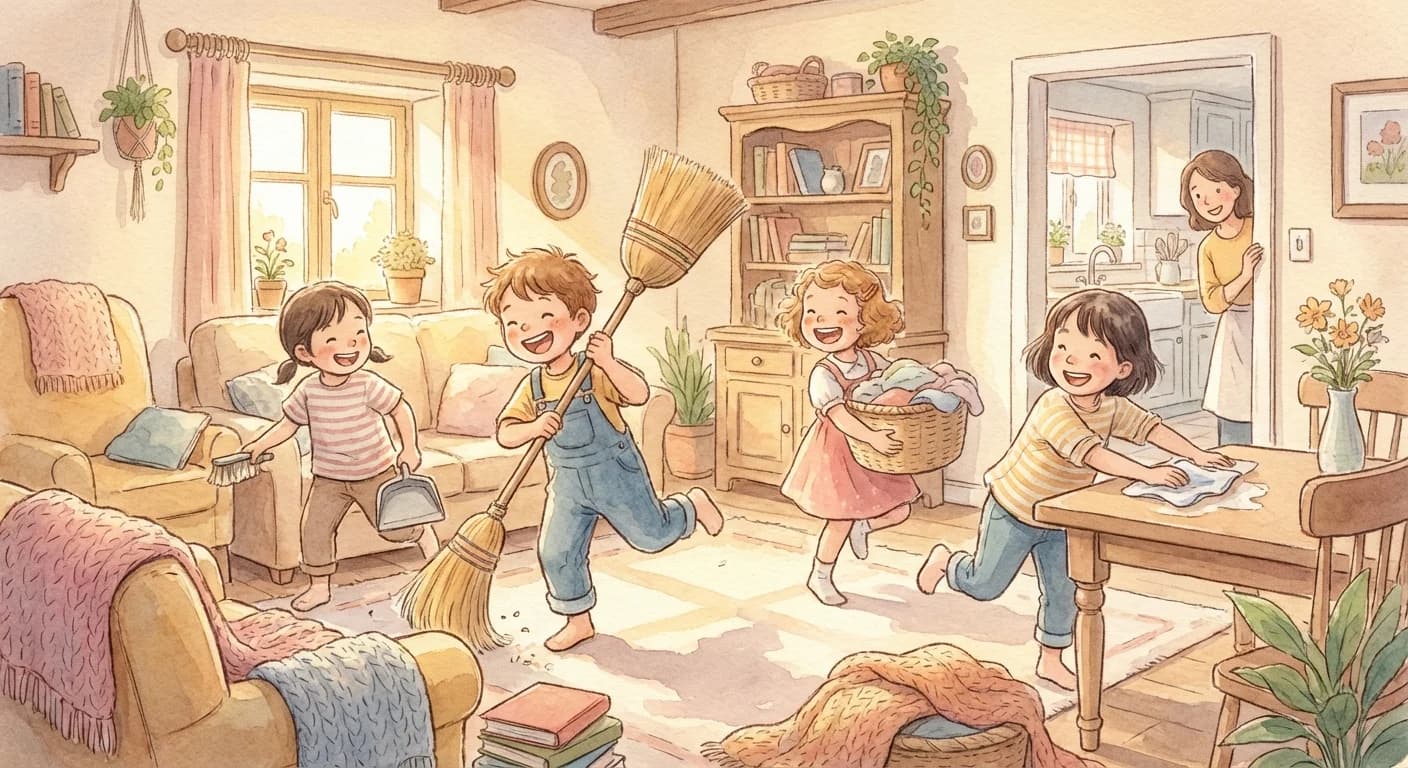
"Because I said so" might get immediate compliance, but it doesn't build lasting motivation. The strategies below tap into what actually drives behavior change: autonomy, progress, connection, and meaningful rewards.
Not every strategy works for every kid. Try a few, see what resonates with your child's personality, and combine approaches that work.
Gamify Everything
Turn chores into a game with points, streaks, levels, and leaderboards. Kids who would never voluntarily clean their room will compete to top the family rankings.
Examples:
- Points for each completed task
- Streak bonuses for consecutive days
- Family leaderboard for friendly competition
- Unlockable badges for milestones
Give Real Choices
Let kids choose WHICH chores they do (from acceptable options) or WHEN they do them. Autonomy is a powerful motivator.
Examples:
- "Do you want to vacuum or do dishes?"
- "Complete before dinner or before bed—your call"
- Let them create their own chore schedule
- Offer a menu of tasks worth different points
Work Alongside Them
Especially for younger kids, chores done together are more fun and teach skills faster. Connection makes contribution feel meaningful.
Examples:
- Fold laundry while watching a show together
- Play music and clean as a family on Saturday mornings
- Race to see who finishes their tasks first
- Cook meals together instead of assigning cooking
Connect Effort to Real Outcomes
Vague praise doesn't motivate. Concrete results do. Show them how their effort leads to things they care about.
Examples:
- Allowance tied to completed tasks
- Points that convert to real money on their debit card
- Completed chores unlock screen time
- "We can go to the park when the living room is clean"
Use Streaks and Momentum
Once kids build a streak of consecutive completions, they become motivated to not break it. Streaks harness loss aversion.
Examples:
- Visual streak counter in a prominent place
- Bonus rewards for 7-day, 30-day streaks
- Family challenge: can we keep a streak all month?
- "You've done 12 days in a row—amazing!"
Let Natural Consequences Happen
Sometimes the best motivation is experiencing what happens when chores don't get done. Remove yourself as the enforcer.
Examples:
- No clean clothes if laundry isn't done = wear dirty clothes
- Didn't pack lunch = hungry afternoon
- Room too messy = can't find what they need
- Didn't take out trash = stinky room
Make Progress Visible
Humans love seeing progress. Charts, apps, and visual trackers make invisible effort visible and satisfying.
Examples:
- Sticker charts for young kids
- Progress bars toward savings goals
- Chore completion percentage on the fridge
- Monthly "contribution reports" celebrating effort
Connect to Purpose
Kids (and adults) are more motivated when they understand WHY something matters. Connect chores to values they care about.
Examples:
- "We all pitch in so we have more time together"
- "You're learning skills you'll need your whole life"
- "A clean space helps everyone feel calm"
- "You're an important part of this family team"
Create Routines and Habits
Chores attached to existing routines become automatic. When it's just "what we do," there's less resistance.
Examples:
- Make bed immediately after waking (no exceptions)
- Clear plate immediately after eating
- Sunday = laundry day, always
- Chores before screens—every single time
Acknowledge Without Over-Praising
Recognition matters, but excessive praise backfires. Acknowledge the behavior specifically and move on.
Examples:
- "You did it. That's your thing now." (not "OMG AMAZING JOB!")
- "The kitchen looks great. Thank you."
- "I noticed you did your chores without reminders this week."
- Simply check off the completed task together