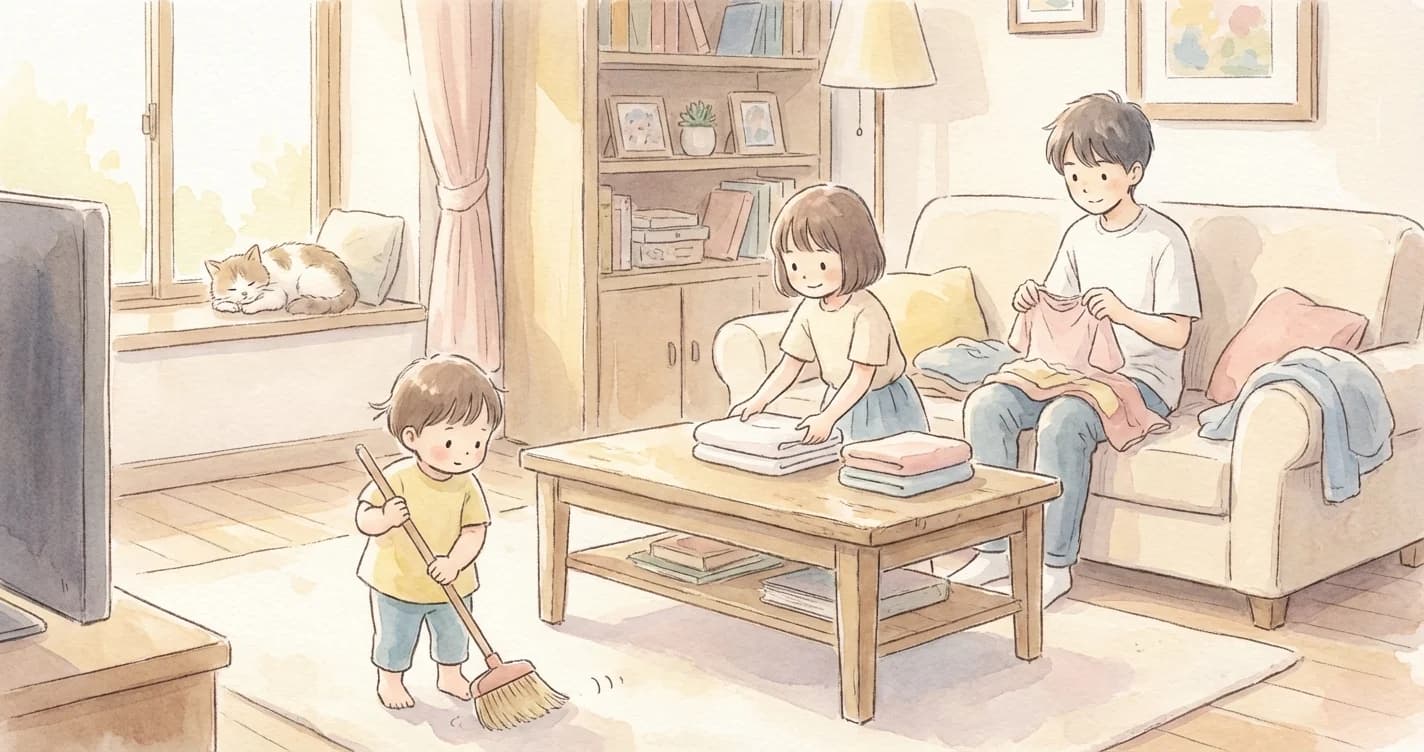
Why Chores Matter for Kids
Chores aren't just about getting the house clean. Research consistently shows that children who participate in household tasks develop crucial life skills that serve them well into adulthood. A landmark 75-year Harvard study found that children who did chores became happier, healthier adults with stronger relationships and more successful careers.
"The best predictor of young adults' success in their mid-20s was their participation in household tasks at age 3-4."
- Marty Rossmann, University of Minnesota StudyKey Benefits of Chores
Executive Function
Planning, organizing, and completing multi-step tasks
Self-Esteem
Pride in contributing to the family and completing tasks
Teamwork
Understanding their role in a functioning household
Responsibility
Ownership of tasks and accountability for outcomes
Beyond individual benefits, chores create a sense of belonging. When children contribute to household tasks, they feel like valued members of the family team rather than passive recipients of care. This belonging is fundamental to emotional development and family bonding.
Age-Appropriate Chores
The key to successful chore implementation is matching tasks to your child's developmental stage. Assigning chores that are too difficult leads to frustration; too easy, and they don't build skills. Here's a general framework, though every child develops differently.
2-3 years
- Put toys in bins
- Carry laundry to hamper
- Help wipe spills
- Feed pets (with help)
4-5 years
- Make bed (imperfectly)
- Set the table
- Sort laundry by color
- Water plants
6-8 years
- Take out trash
- Load dishwasher
- Fold simple laundry
- Vacuum one room
9-12 years
- Cook simple meals
- Do laundry start to finish
- Clean bathroom
- Mow lawn (supervised)
13+ years
- Full meal prep
- Deep cleaning tasks
- Yard work
- Watch younger siblings
Want the Complete Breakdown?
Our detailed guide covers specific tasks for each age, how to introduce new chores, and signs your child is ready for more responsibility.
Read: Age-Appropriate Chores GuideAdjusting for Your Child
These age ranges are guidelines, not rules. Consider your child's individual abilities, interests, and any special needs. A child who loves cooking might be ready to help in the kitchen earlier. A child with motor skill challenges might need modified tasks. The goal is achievable challenge—hard enough to build skills, easy enough to succeed.
Creating Your Chore System
A successful chore system has three components: clear expectations, consistent execution, and meaningful consequences. Without all three, systems fail. Here's how to build one that works.
Step 1: Define Your Goals
Before assigning any tasks, clarify what you want to achieve:
- Life skills: Teaching self-sufficiency (cooking, laundry, cleaning)
- Family contribution: Everyone helps maintain the home
- Work ethic: Understanding effort leads to results
- Money management: Connecting work to earning (if paying for chores)
Step 2: List and Categorize Tasks
Write down every task needed to run your household, then categorize them:
Daily Tasks
- Make beds
- Clear dishes
- Feed pets
- Pick up common areas
Weekly Tasks
- Vacuum/sweep floors
- Clean bathrooms
- Take out trash/recycling
- Do laundry
Step 3: Assign and Schedule
Match tasks to children based on ability and interest. Consider:
- Rotation vs. ownership: Some families rotate all chores; others assign permanent tasks. Permanent tasks build mastery, rotation builds variety.
- Time of day: Morning chores before school, evening chores after dinner. Consistency matters more than the specific time.
- Child input: Let kids choose from acceptable options. Ownership increases buy-in.
Step 4: Set Clear Standards
"Clean your room" means different things to a 6-year-old and a parent. Define what "done" looks like. For younger kids, use pictures or checklists. For example: "Clean room = bed made, floor clear, clothes in hamper, toys in bins." Remove ambiguity to remove arguments.
Chore Charts That Work
A chore chart makes expectations visible. Instead of verbal reminders (nagging), kids can see what needs to be done and track their own progress. The right format depends on your family.
Types of Chore Charts
Printable Charts
- + Free/cheap
- + No technology needed
- + Tangible for young kids
- - Wear out quickly
- - Manual tracking
- - Easy to ignore
Best for: Young kids (2-6), families new to chore systems
Magnetic/Dry-Erase Boards
- + Reusable
- + Visible in common areas
- + Satisfying to move/check
- - Limited customization
- - Kids can "lose" magnets
- - No history tracking
Best for: Elementary-age kids, hands-on families
Chore Apps (like ChoreSplit)
- + Gamification features
- + Automatic tracking
- + Rewards integration
- + Works for multiple kids
- - Requires devices
- - Subscription cost
- - Screen time concerns
Best for: Tech-comfortable families, multiple kids, kids 7+
Deep Dive: Chore Chart Options
Compare the best printable templates, magnetic boards, and apps with detailed reviews and recommendations for different family situations.
Read: Chore Charts That Actually WorkMaking Any Chart Work
The format matters less than consistency. Whatever system you choose, place it where everyone sees it, review it together weekly, and actually use the tracking mechanism. A fancy app ignored is worse than a simple paper chart checked daily.
Motivation Strategies That Work
"Because I said so" works short-term but builds resentment. Sustainable chore systems tap into both extrinsic motivation (rewards) and intrinsic motivation (pride, belonging, mastery). Here's how to build both.
Intrinsic Motivation Builders
Autonomy
Let kids choose which chores, when to do them (within limits), or how to complete them
Competence
Start easy, build skills gradually. Celebrate improvement, not just completion
Connection
Work alongside kids. Make chores family time, not isolation
Purpose
Explain why tasks matter. "We all pitch in so we can spend more time together"
Extrinsic Motivation (Rewards)
External rewards can jumpstart habits, especially with resistant kids. The key is using them strategically to build—not replace—internal motivation.
- Points and progress: Visual progress toward a goal (like a sticker chart) works for young kids
- Privileges: Screen time, special activities, or later bedtimes earned through chores
- Money: Allowance or per-task payment teaches work-earning connection
- Gamification: Streaks, leaderboards, and achievements make chores feel like a game
The Gamification Approach
Gamification applies game mechanics to non-game activities. For chores, this means:
- Streaks: Consecutive days of completed chores earn bonus points
- Leaderboards: Sibling (healthy) competition drives effort
- Achievements: Badges for milestones create collection motivation
- Levels: Progress through ranks as skills improve
More Motivation Strategies
Get 15+ proven techniques for motivating kids to do chores, from toddlers to teens, with strategies for different personalities.
Read: How to Motivate Kids to Do ChoresOvercoming Common Challenges
Even great chore systems hit obstacles. Here are solutions to the most common challenges families face.
"I forget" / "I didn't know"
Make expectations impossible to miss. Visual charts in common areas, app notifications, consistent timing. If they can remember their favorite YouTuber's upload schedule, they can remember chores.
"It's not fair" (sibling complaints)
Create transparency. Show why different ages have different tasks. Let kids see each other's assignments. Consider rotating unpopular chores so everyone shares the burden.
Half-done or sloppy work
Define "done" clearly before the task begins. Use checklists for multi-step chores. Implement a "check and approve" step before marking complete. Quality standards should be age-appropriate.
Initial enthusiasm fades
This is normal. Habits take 2-3 months to solidify. Keep consequences consistent even when motivation dips. Refresh with new challenges, rotate tasks, or introduce new rewards.
Power struggles
Remove yourself from the battle. Let the system do the enforcing. "The rule is chores before screens" is different from "I'm telling you to do chores." Connect tasks to privileges, not your authority.
Rewards and Allowance
Should you pay kids for chores? Experts disagree, and there's no single right answer. Here are the main approaches and when each works best.
Three Common Approaches
1. Unconditional Allowance
Kids receive money regardless of chores. Chores are separate family responsibilities.
Best for: Families who want to teach money management separately from work ethic
2. Commission-Based
Kids earn money per task completed. No chores = no money. Direct work-reward connection.
Best for: Teaching that money comes from work; highly motivated kids
3. Hybrid Approach (Recommended)
Base "family contribution" chores are unpaid expectations. Extra "job" chores earn money. Kids learn both family responsibility and work-earning connection.
Best for: Most families; balances both values
Making Rewards Work
Whatever approach you choose, follow these principles:
- Be consistent: Same rules every week, no exceptions
- Pay promptly: Delayed rewards lose motivational power
- Teach what to do with money: Save, spend, and give divisions
- Increase with age: More responsibility = more earning potential
Using Technology
Digital chore tools can automate tracking, add gamification, and connect chores directly to money management. Here's how to use them effectively.
Benefits of Chore Apps
- Automatic reminders: The app nags, not you
- Progress tracking: See streaks, history, and patterns
- Gamification: Built-in points, badges, and leaderboards
- Reward integration: Direct connection to allowance or debit cards
- Multi-child management: Handle different ages and tasks easily