Age-Appropriate Chore List for Kids (3 to 18)
What can a 3-year-old actually handle? When should a 12-year-old do their own laundry? This complete guide breaks down age-appropriate chores with specific tasks, time estimates, and difficulty ratings for every age group from toddlers through teens.
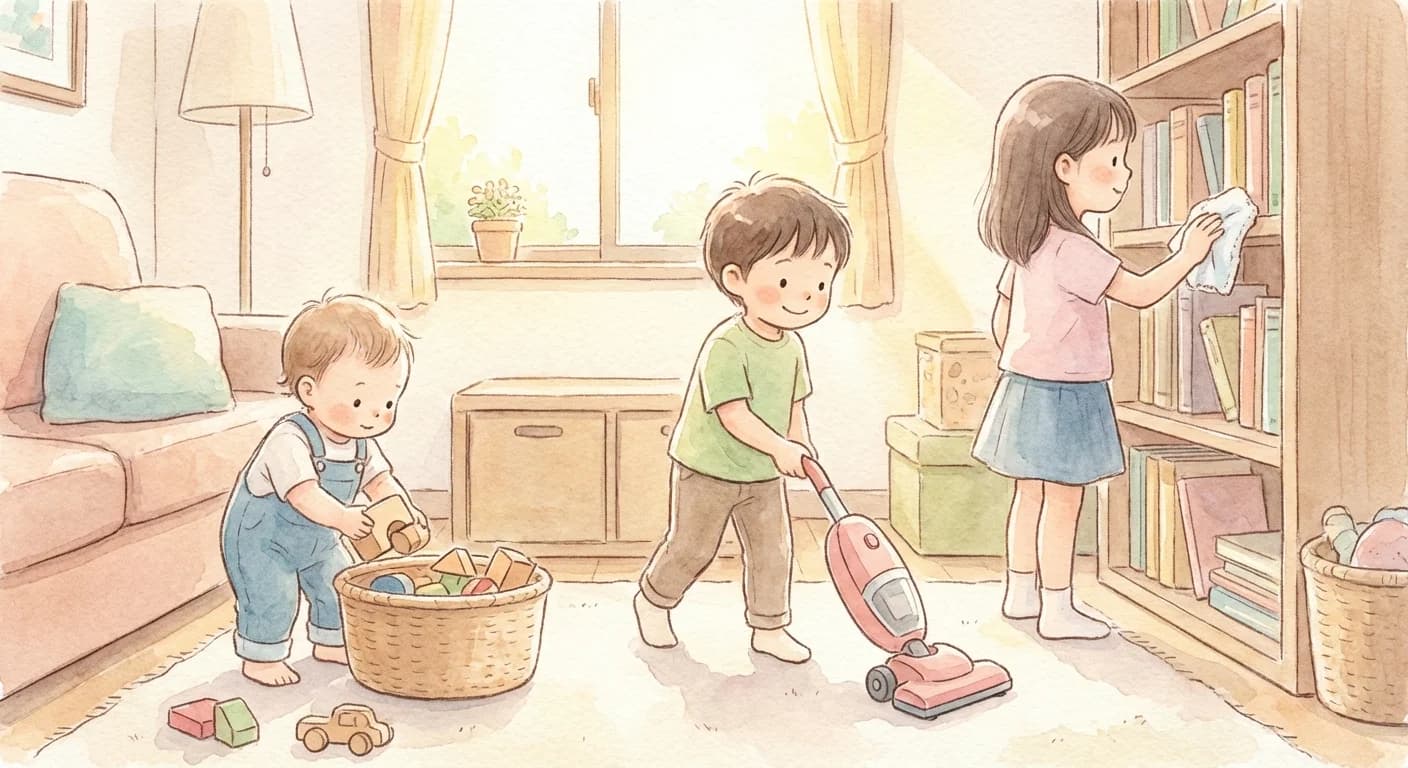
The most common mistake parents make with chores is expecting too much too soon or too little too late. A 3-year-old can't do laundry, but a 12-year-old absolutely can—and should. Matching chores to developmental abilities sets kids up for success.
Important: These are guidelines based on typical development. Your child may be ready for tasks earlier or later. Consider their individual abilities, interests, and any special needs.
2-3 Years
At this age, children want to help and imitate adults. Tasks should be simple, hands-on, and done alongside a parent. Perfection is not the goal—participation is.
| Task | Time |
|---|---|
| Put toys in a bin or basket | 2-5 min |
| Carry dirty clothes to hamper | 1-2 min |
| Help wipe up spills (with guidance) | 2-3 min |
| Put books on low shelf | 2-3 min |
| Help feed pets (pour food with help) | 3-5 min |
| Put napkins on table | 1-2 min |
| Throw away trash items | 1 min |
Tips for 2-3 Years
- Make cleanup a game with songs or timers
- Use bins at child height with picture labels
- Work alongside them, not just supervise
- Celebrate effort, not perfection
4-5 Years
Children can follow 2-3 step instructions and take pride in "real" contributions. They can handle slightly more complex tasks but still need reminders and occasional help.
| Task | Time |
|---|---|
| Make bed (pull up covers) | 3-5 min |
| Set the table (unbreakables) | 3-5 min |
| Clear own dishes after meals | 1-2 min |
| Sort laundry by color | 5-10 min |
| Water plants | 3-5 min |
| Feed pets independently | 3-5 min |
| Pick up toys and belongings | 5-10 min |
| Help put away groceries (light items) | 5-10 min |
| Wipe down surfaces with cloth | 3-5 min |
Tips for 4-5 Years
- Use visual checklists with pictures
- Create consistent routines (morning chores, evening chores)
- Give specific praise: "You put all the forks in the right spot!"
- Expect imperfection—a lumpy bed still counts
6-8 Years
Children can work more independently and handle multi-step tasks. They understand cause and effect and can be held accountable for consistent chore completion.
| Task | Time |
|---|---|
| Make bed properly | 3-5 min |
| Keep bedroom clean | 10-15 min |
| Take out trash | 3-5 min |
| Load/unload dishwasher | 5-10 min |
| Fold simple laundry (towels, underwear) | 10-15 min |
| Vacuum one room | 10-15 min |
| Sweep floors | 10-15 min |
| Pack own lunch | 10-15 min |
| Rake leaves (small area) | 15-20 min |
| Help prepare simple food items | 10-15 min |
| Take care of pet daily needs | 10-15 min |
Tips for 6-8 Years
- Transition from reminders to expectations
- Use chore charts or apps for tracking
- Tie privileges to chore completion
- Teach skills explicitly before expecting independence
9-12 Years
Preteens can handle significant responsibility and learn complex household skills. This is the ideal time to teach tasks they will need as adults.
| Task | Time |
|---|---|
| Clean bathroom (toilet, sink, mirror) | 15-20 min |
| Do laundry start to finish | 30+ min (spread out) |
| Cook simple meals | 20-30 min |
| Mow lawn (with supervision initially) | 30-45 min |
| Vacuum entire house | 20-30 min |
| Wash dishes by hand | 10-15 min |
| Change bed sheets | 10-15 min |
| Clean kitchen (counters, appliances) | 15-20 min |
| Watch younger siblings briefly | varies |
| Organize closets/drawers | 20-30 min |
| Wash car (exterior) | 30-45 min |
Tips for 9-12 Years
- Allow choice in which chores they do
- Set deadlines, not exact times
- Quality standards matter now—teach them
- This is training for independent living
13-17 Years
Teenagers should be capable of nearly any household task. The goal shifts from learning basic skills to taking genuine ownership and contributing meaningfully to family functioning.
| Task | Time |
|---|---|
| All cooking and meal prep | varies |
| Deep cleaning tasks | 30-60 min |
| Yard work (all types) | 30-60 min |
| Grocery shopping | 30-60 min |
| Minor home maintenance | varies |
| Watch/care for younger siblings | varies |
| Manage own laundry completely | ongoing |
| Plan and prepare family meals | 30-60 min |
| Run errands | varies |
| Help with home improvement projects | varies |
Tips for 13-17 Years
- Give ownership of entire areas (their bathroom, the garage)
- Connect effort to privileges (car use, spending money)
- Allow natural consequences for forgotten tasks
- Prepare them for college/adult living
Why Age-Appropriate Chores Matter
Giving a 4-year-old a mop and telling them to clean the kitchen floor is a setup for frustration on both sides. Giving a 14-year-old nothing but "put your shoes away" is a missed opportunity to build life skills they will need in a few years.
Research from the University of Minnesota found that the best predictor of success in young adulthood was whether children participated in household tasks starting at age 3-4. Not academic performance. Not extracurriculars. Chores. But the study also showed that the benefit came from sustained, age-appropriate participation -- not from overwhelming kids with tasks they could not handle.
The developmental sweet spot is tasks that stretch a child slightly beyond their comfort zone but remain achievable with reasonable effort. A 6-year-old who successfully vacuums a room feels genuine accomplishment. A 6-year-old who fails at scrubbing a bathtub just feels defeated.
Builds confidence
Completing real tasks gives kids a sense of competence that artificial praise cannot match.
Develops executive function
Multi-step chores (laundry: sort, wash, dry, fold, put away) build planning and sequencing skills.
Teaches responsibility
When the dog does not get fed because your child forgot, natural consequences do the teaching.
How to Introduce New Chores at Any Age
The biggest mistake parents make is assigning a chore without teaching it first. Would you start a new job without training? Kids feel the same way. Here is a four-step process that works from toddlers through teens:
Do it together
Complete the chore alongside your child 3-5 times. Narrate what you are doing and why. "We wipe the counter in circles to get all the crumbs."
Watch and coach
Let them do it while you supervise. Offer gentle corrections. "You missed the corner -- grab those crumbs too."
Check the result
They do it independently and you inspect after. Use a consistent standard so they know what "done" looks like.
Full independence
The chore is theirs. You spot-check occasionally but trust the process. This might take a week for a 12-year-old or a month for a 5-year-old.
Common Mistakes Parents Make with Chores
Redoing their work
When you remake the bed your child just made, you send the message that their effort does not count. Unless safety is at stake, let imperfect work stand. A lumpy bed is still a made bed.
Age-shaming
"You are 10 years old and you still cannot fold a shirt?" Comparing your child to an imaginary standard (or a sibling) destroys motivation. Focus on progress, not benchmarks.
Inconsistency
Enforcing chores Monday through Thursday but letting weekends slide teaches kids that rules are negotiable. The habit matters more than any individual day.
All-or-nothing expectations
Expecting a 7-year-old to clean the entire kitchen is unrealistic. Break big jobs into specific tasks: wipe the table, put dishes in the sink, sweep under the table.
Starting too late
Many parents wait until kids are 8 or 9 to introduce chores, then wonder why there is resistance. The earlier you start (even at age 2 with toy cleanup), the more natural chores feel.
Chores as Life Skill Training
Every chore teaches something beyond the task itself. When you frame chores as life skill training rather than drudgery, both you and your kids approach them differently.
| Chore | Life Skill | Why It Matters |
|---|---|---|
| Cooking meals | Self-sufficiency | College students who can cook eat healthier and spend less |
| Doing laundry | Process management | Multi-step tasks build executive function |
| Managing pet care | Responsibility for others | Teaches that your actions affect living beings |
| Cleaning bathroom | Hygiene awareness | Builds standards for personal living spaces |
| Yard work | Physical work ethic | Not everything worth doing happens on a screen |
| Grocery shopping | Budgeting | Comparing prices and making trade-offs is real-world math |
A 2015 survey by Braun Research found that 82% of adults said they did chores growing up, but only 28% assigned chores to their own children. If you are reading this guide, you are already ahead of most parents in preparing your kids for independent living.
Special Considerations
Kids with ADHD or Executive Function Challenges
Break chores into smaller, more specific steps. Instead of "clean your room," try "put all clothes in the hamper, then put all books on the shelf, then make your bed." Visual checklists with pictures work better than verbal instructions. Use timers to create structure without nagging. An app-based system with immediate point feedback can be especially motivating for kids who struggle with delayed gratification.
Kids with Physical Limitations
Focus on what they can do, not what they cannot. Sorting laundry, wiping surfaces, organizing drawers, and setting the table are accessible to most children regardless of physical ability. The goal is participation and contribution -- every family member pitches in according to their capacity.
Divorced and Blended Families
Age-appropriate chores become even more important when kids move between households. Consistency in expectations (even if specific chores differ) gives children stability. A shared tracking app lets both parents see progress without direct communication about chores. Read our guide to chores for divorced and blended families for a complete system.
Frequently Asked Questions
Key Principles for All Ages
Teach, Then Expect
Show them how to do it several times before expecting independence
Progress Over Perfection
A lumpy bed made by a 5-year-old is a success
Consistency Builds Habits
Same chores, same time, every day creates automaticity
Match Ability, Not Age
Your child might be ready earlier or later than typical